



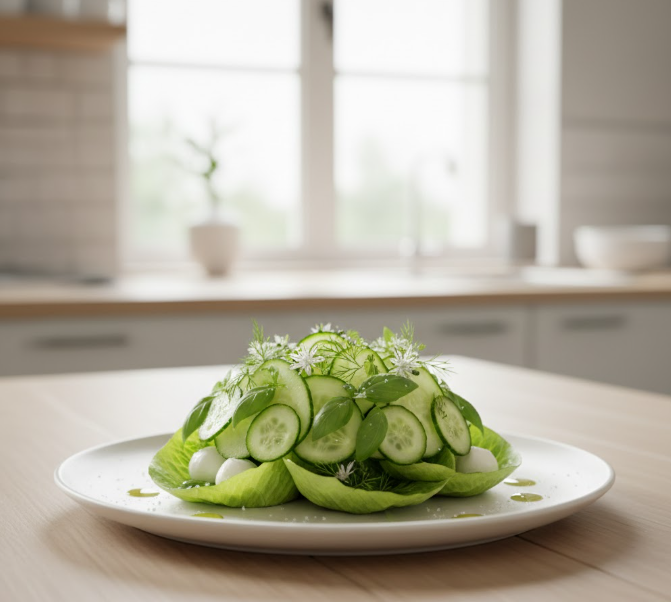
There’s something deeply satisfying about a salad that feels both simple and thoughtful. A Soft-Edge Salad with Clean Herb Geometry is not just a dish; it’s a visual and sensory experience. Imagine crisp vegetables carefully layered, herbs placed in subtle geometric patterns, and flavors that blend softly, leaving your palate refreshed but intrigued. It’s not about piling ingredients randomly—it’s about creating a gentle rhythm in every bite. 🥗
The Concept of Soft-Edge in Salads
Soft-edge doesn’t mean sloppy. It’s about gentle transitions in textures and colors. Think of how soft green butter lettuce gradually flows into the pale, creamy tone of avocado slices. Or how cucumber ribbons melt into radish slices. This is visual comfort, and it mirrors the idea of taste comfort—no overpowering flavors hitting at once, but a delicate layering that feels natural.
Clean Herb Geometry Explained
Here, herbs are not tossed randomly. They are placed in purposeful shapes and lines, creating a subtle geometry. Tiny basil leaves may line a curve around the edge of the plate. Chives could form mini grids over cherry tomato halves. Dill sprigs might fan out like delicate rays. This geometric placement isn’t rigid, but it creates a sense of order that the eyes notice before the taste buds do. The result? A salad that is aesthetically pleasing and almost meditative to eat. 🌿
Choosing Your Base Ingredients
Soft-edge salads shine when ingredients are carefully chosen for texture, color, and mild flavors.
- Leafy greens: Butter lettuce, baby spinach, and arugula for tender layers.
- Vegetables: Thinly sliced cucumbers, radishes, or carrots for soft yet crisp edges.
- Fruits: Pears, green apples, or small orange segments add gentle sweetness.
- Nuts & seeds: Slivered almonds, sunflower seeds, or pine nuts for a subtle crunch without breaking the softness.
| Ingredient Type | Suggested Varieties | Textural Note | Flavor Note |
|---|---|---|---|
| Leafy Greens | Butter lettuce, baby spinach | Soft, tender | Mild, slightly earthy |
| Vegetables | Cucumbers, radishes, carrots | Crisp, thinly sliced | Refreshing, subtle |
| Fruits | Pear, green apple, orange | Soft, juicy | Sweet, bright |
| Nuts & Seeds | Almonds, pine nuts, sunflower | Light crunch | Nutty, gentle |
Herb Selection for Geometry
Herbs are the stars of clean geometry. They must be fresh, pliable, and fragrant. Here are some good choices:
- Basil: Small leaves, perfect for curves.
- Chives: Great for straight lines or grids.
- Dill: Light and feathery, ideal for fanning patterns.
- Mint: Adds both aroma and small, rounded shapes.
Dressing With a Soft Touch
Soft-edge salads thrive on light dressings. Avoid heavy, creamy sauces that can flatten the geometry and overwhelm flavors. A few ideas:
- Lemon-Honey Vinaigrette: Fresh lemon juice, a touch of honey, olive oil, salt, and pepper.
- Herb-Infused Olive Oil: Gently warm olive oil with thyme or rosemary, cool, and drizzle lightly.
- Yogurt-Light Dressing: Thin yogurt with lemon zest and a pinch of salt, brushed or drizzled gently.
Layering and Plating Techniques
The visual rhythm of a soft-edge salad depends on how you layer and place each component.
- Start with the base of tender greens, letting edges overlap naturally.
- Arrange thinly sliced vegetables in soft arcs or gentle waves across the plate.
- Add fruits or nuts sparingly, giving each bite a surprise but keeping the plate airy.
- Place herbs last, using them like tiny brush strokes on a canvas.
Texture and Flavor Harmony
Even with clean geometry, taste harmony is key. Pair ingredients so they contrast yet complement:
- Crisp cucumber with soft pear.
- Mild butter lettuce with slightly tangy vinaigrette.
- Light herb notes against gentle sweetness from fruits.
This salad isn’t about strong, dominant flavors. It’s about the soft dance of flavors and textures, which leaves your palate calm yet interested.
Why Soft-Edge Salads Are Special
- Visual relaxation: Geometric herbs create order and balance, calming the mind.
- Gentle on digestion: Light ingredients and minimal dressings are easy to digest.
- Mindful eating: Because every element is intentional, eating becomes slower, more appreciative.
- Instagram-friendly: Perfect for photos without looking forced. 😉
Tips for Perfect Herb Geometry
- Use tweezers or small tongs to place tiny leaves precisely.
- Rotate the plate as you work to see the salad from multiple angles.
- Keep herbs dry; excess moisture can blur the geometric lines.
- Don’t overcrowd—negative space is part of the design.
FAQ Section
Q: Can I make this salad in advance?
A: You can prep the ingredients, but assemble the salad just before serving. Herbs lose their shape and vibrancy if left sitting.
Q: Can I use heavier vegetables?
A: For soft-edge salads, keep textures gentle. Harder vegetables like beets or raw broccoli work only if sliced ultra-thin.
Q: What if I don’t have fresh herbs?
A: Freshness is key for geometry. If needed, frozen herbs can work for flavor, but they won’t maintain the delicate visual patterns.
Q: Can I add proteins?
A: Yes, but keep them light—grilled shrimp, poached chicken, or soft-boiled eggs maintain the salad’s soft character.
Final Thoughts
Creating a Soft-Edge Salad with Clean Herb Geometry is like composing a short, visual poem on your plate. Each bite feels like it was meant to happen, every herb and slice placed with care. It’s simple, yes—but simplicity done with mindfulness and subtle artistry. 🥗✨
This isn’t just a salad. It’s a reminder that beauty, taste, and mindfulness can coexist, even in something as everyday as lunch. So next time you reach for greens, think soft edges, think geometry, and savor the gentle dance of flavors.
